
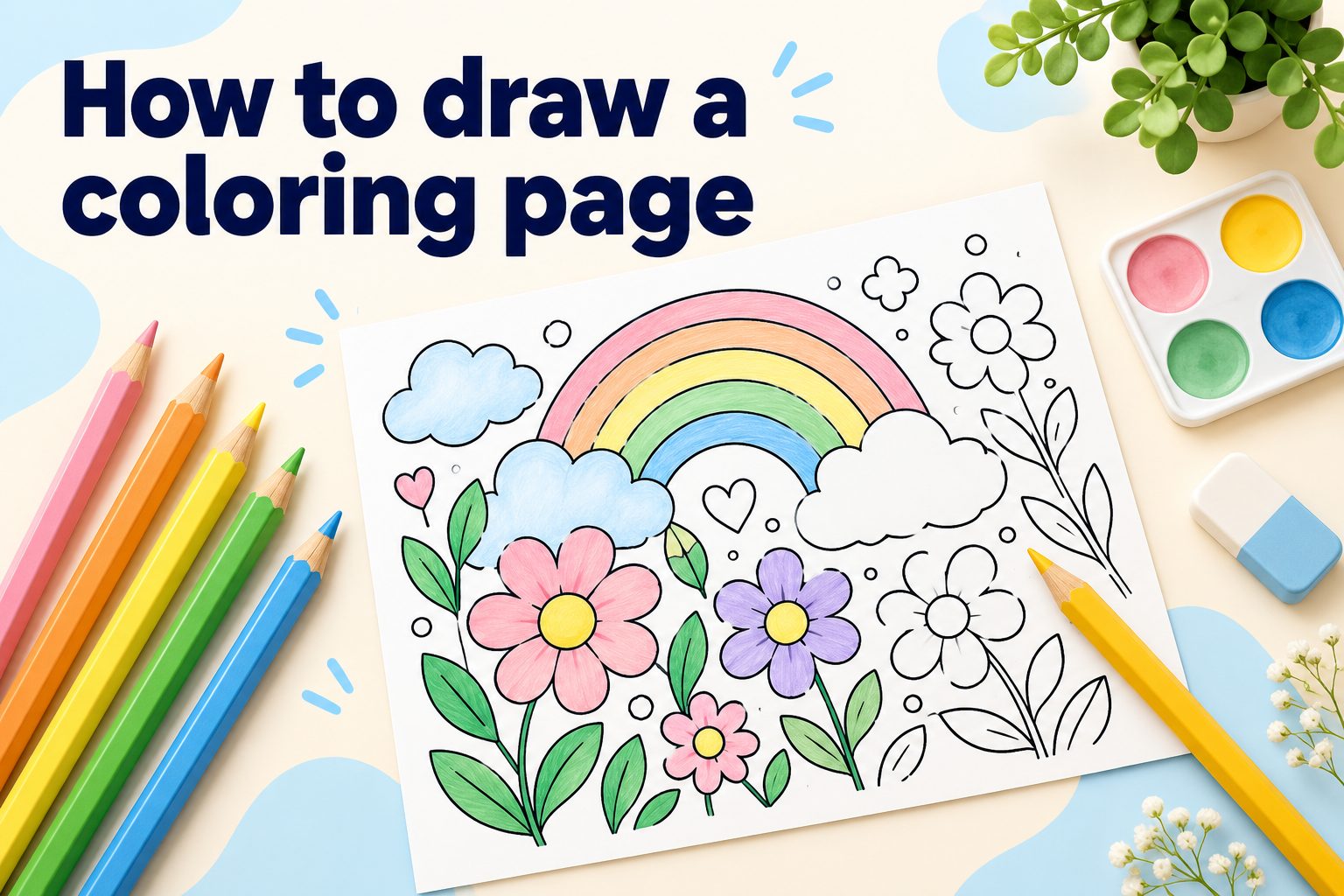
Learning how to draw a coloring page is easier than most beginners think, and it is a fun creative skill anyone can build with simple tools and practice. A coloring page is basically a clean black-and-white line drawing with closed shapes, bold outlines, and enough open space for crayons, markers, or colored pencils. In this guide, you will learn what makes a good coloring page, which tools to use, how to plan ideas, and the exact drawing process from sketch to final lines. You will also see popular styles, practical use cases, common mistakes, best practices, and answers to frequent questions.
Whether you want to create pages for kids, for classroom activities, for relaxation, or for printable products, this complete walkthrough will help you draw clear, attractive, and easy-to-color designs with confidence.
Why Learning To Draw A Coloring Page Matters
Drawing your own coloring pages gives you creative freedom, saves money, and lets you make designs that match any age, theme, or skill level perfectly.
1. Create Custom Designs For Any Age
When you learn how to draw a coloring page yourself, you can adjust the difficulty, size, and theme for toddlers, kids, teens, or adults. You can make large simple shapes for preschoolers or add detailed patterns for older colorists. This flexibility means your pages always fit the audience, which makes coloring more enjoyable, less frustrating, and much more personal than generic store-bought books.
2. Build Core Drawing Skills Naturally
Designing coloring pages improves your line control, observation, proportion, and composition without pressure to shade or use color. Because you focus only on clean outlines and clear shapes, you practice the fundamentals of drawing in a simple way. Over time, your hand becomes steadier, your characters look more balanced, and your ability to simplify complex objects into friendly line art grows stronger.
3. Support Learning And Relaxation Goals
Handmade coloring pages can teach letters, numbers, animals, nature, holidays, and positive habits while keeping learners engaged and calm. Teachers and parents love custom pages because they match lessons and interests. For adults, drawing and coloring both reduce stress, encourage mindfulness, and provide a screen-free creative break that feels productive, soothing, and satisfying at the same time.
4. Save Money And Sell Printables
Once you know how to draw a coloring page, you no longer need to buy books for every holiday, classroom theme, or party. You can quickly sketch what you need at home. If you enjoy it, you can even create printable packs, activity sheets, or party favors to share or sell. This turns a simple hobby into a useful skill with real practical and creative value.
5. Develop Your Artistic Style Faster
Making coloring pages forces you to make clear choices about line thickness, character expression, and simplicity. This helps you discover a recognizable style much faster than detailed illustration. You will learn what looks cute, what looks clean, and what colors well. That clear style can later help with stickers, children’s books, crafts, and other illustration projects.
6. Share Joy With Family And Community
A hand-drawn coloring page feels thoughtful and personal, whether you make it for your child, your students, or your friends. You can create birthday themes, family pets, favorite animals, or inside jokes. People love coloring something made just for them. This personal connection makes your art more meaningful and encourages others to try drawing too.
Essential Tools To Draw A Coloring Page
You do not need expensive supplies to draw a coloring page, just a few basic tools that create dark, clean, and easy-to-color lines.
- Smooth Paper: Use plain white printer paper, sketch paper, or marker paper that keeps lines sharp and prevents bleeding.
- Pencils And Eraser: A simple HB pencil and soft eraser help you sketch lightly, fix proportions, and clean up before inking.
- Black Fineliners: Waterproof fine liners in 0.3, 0.5, and 0.8 sizes create crisp outlines that are easy to color inside.
- Ruler And Shapes: Basic rulers, circles, and stencils help you draw neat borders, frames, and symmetrical objects.
- Scanner Or Phone: A scanner or clear phone photo lets you save, print, resize, and share your finished coloring page.
Plan Your Coloring Page Idea Before Drawing
Good planning makes coloring page drawing much faster and cleaner. Start by choosing your audience, because toddlers need very simple shapes while older kids and adults enjoy more detail and patterns.
Next, pick one clear subject for the page, such as a cat, a garden, a truck, or a holiday scene. A single focus keeps the composition strong and avoids a cluttered look that is hard to color.
Then think about layout and white space. Leave wide open areas for coloring, keep the main object large and centered, and add only a few background elements like clouds, stars, grass, or simple borders.
Consider the mood and difficulty as well. Cute rounded shapes feel friendly for kids, while mandalas and floral patterns feel calming for adults. Decide early if your page should be easy, medium, or detailed.
Finally, collect two or three visual references for shapes and proportions. You do not need to copy them, but looking at real photos or simple cartoons helps you draw believable animals, plants, and objects with clean confident lines.
Step By Step Guide To Draw A Coloring Page
Follow these simple steps to turn a rough idea into a clean printable coloring page that is fun and easy to color.
- Choose Theme: Pick one subject, audience, and size, such as an easy kitten page for preschoolers on letter-size paper.
- Draw Light Sketch: Use a pencil to block basic shapes lightly, focusing on proportion, placement, and large open areas.
- Refine Shapes: Round sharp corners, enlarge small areas, and simplify details so every section can hold color easily.
- Close All Gaps: Connect lines fully around each shape to prevent color from visually leaking into nearby areas.
- Ink Outlines: Trace with a black pen, using thick outer lines and thinner inner details for clear visual hierarchy.
- Add Background: Add three to five simple elements like sun, clouds, grass, or dots to fill empty space without clutter.
- Erase And Clean: Erase pencil marks completely, fix broken lines, and make whites bright and tidy for printing.
- Test Color It: Print a copy and color it quickly to check if shapes are large enough and lines are dark enough.
Popular Coloring Page Themes For Beginners
Starting with simple popular themes helps you practice drawing coloring pages while creating designs people love to color right away.
1. Cute Animal Coloring Pages
Cute animals are perfect for beginners because they use circles, ovals, and rounded ears. Draw a large cat face, puppy, bunny, or owl with big eyes and simple fur lines. Keep paws and tails chunky and avoid tiny details. Add a bone, carrot, or moon for context. These friendly characters are always popular with kids and look great even with simple lines.
2. Easy Flower And Garden Pages
Flowers are ideal for learning symmetry and repetition. Draw a large central flower with five or six rounded petals, a thick stem, and two big leaves. Add a sun, butterfly, grass tufts, and dots for pollen. Keep petal shapes open and bold. Garden themes work for spring, Mother’s Day, and relaxation pages because they are cheerful and naturally easy to color.
3. Fun Food Coloring Pages
Food with faces is simple and appealing. Try a smiling cupcake, ice cream cone, slice of watermelon, or hamburger with big eyes and a happy mouth. Use thick outlines and separate each topping or layer with clear lines. Add sprinkles, cherries, or steam swirls. Kids enjoy coloring familiar foods, and the separate sections make color choices fun and obvious.
4. Vehicle Coloring Pages For Kids
Cars, trucks, trains, and planes teach you to combine rectangles and circles neatly. Draw a side view with large wheels, clear windows, and a simple road or clouds. Keep doors and lights as basic shapes without tiny bolts. Use a ruler for straight edges. Vehicle pages are excellent for preschoolers because the big parts are easy to hold color and recognize quickly.
5. Holiday Coloring Page Ideas
Holiday pages are festive and useful all year. Draw a pumpkin with a friendly face, a Christmas tree with ornaments, Easter eggs with patterns, or hearts for Valentine’s Day. Keep symbols large and centered with a simple border. Add words like joy or thank you in bubble letters. These seasonal designs are great for classrooms, parties, and family activities.
6. Simple Mandala And Pattern Pages
Mandalas help you practice symmetry and neatness for teen and adult colorists. Start with a central circle, then add repeating petals, dots, and arcs in even rings. Use a ruler and light guidelines to keep everything balanced. Keep line spacing wide enough for markers. Pattern pages look impressive but are built from very simple repeated shapes anyone can learn.
Simple Coloring Page Drawing Techniques That Work
These core techniques will help you draw clean lines, balanced shapes, and open areas that make every coloring page enjoyable to use.
1. Use Bold Closed Outlines Always
Every colorable shape needs a complete dark border with no breaks or faint spots. Draw outer contours thicker than inner details so the main subject stands out. Go over lines once with steady pressure instead of sketchy strokes. Closed bold outlines keep crayons and markers inside areas, make scanning clearer, and give your page a professional printable look even if the drawing is simple.
2. Simplify Details Into Big Shapes
Beginners often add too much texture, which makes coloring frustrating. Replace fur with two or three curved lines, replace leaves with smooth ovals, and replace bricks with a few large rectangles. Ask if a child could color each part easily. If not, merge or remove it. Simple shapes color faster, look cleaner when printed, and reduce eye strain for young artists.
3. Keep Proportions Large And Friendly
Make heads slightly bigger, eyes larger, hands chunkier, and objects wider than real life for a cute approachable feel. Large features are easier to draw and much easier to color. Use basic guides like dividing the face in half for eye placement. Friendly proportions forgive small mistakes, print well at different sizes, and instantly make your coloring page feel welcoming.
4. Balance White Space Carefully
White space is the colorable area, so protect it. Do not fill every corner with patterns. Keep the main subject large, leave margins around the edges, and limit background items to a few simple icons. Good balance prevents overwhelm, helps color choices pop, and makes the page suitable for crayons, which need room to move. Less clutter almost always colors better.
5. Build Symmetry With Guidelines
Light center lines and circles help you draw even faces, wings, flowers, and mandalas. Sketch a vertical line for faces, a horizontal line for eyes, and concentric circles for radial designs. These faint guides keep both sides matching without heavy measuring. Erase them after inking. Symmetrical art looks tidy, professional, and calming, which makes people want to color it.
6. Vary Line Weight For Clarity
Use thick lines for outer edges, medium lines for major divisions, and thin lines for small decoration. This hierarchy tells the eye what is important and separates color zones clearly. For example, outline a bear thickly, divide belly with medium lines, and add cheek dots thinly. Varied weight adds charm without adding complexity and improves print quality.
Common Coloring Page Drawing Mistakes To Avoid
Avoiding these common errors will instantly make your coloring pages cleaner, easier to color, and more enjoyable for all ages.
1. Leaving Tiny Gaps In Outlines
Small breaks in borders confuse colorists and look messy when printed. Markers can visually bleed through gaps, and kids do not know where one area ends. Slow down at corners and joints, zoom in if drawing digitally, and double-check each shape. Fully closed outlines are the most important rule for a usable coloring page, so always review lines before sharing.
2. Making Areas Too Small To Color
Very thin stripes, tiny eyes, or crowded patterns frustrate young children and cause tears in paper with heavy coloring. Keep fingers, petals, and decorations wide enough for a crayon tip. If a detail looks smaller than a pea, enlarge or remove it. Spacious areas color smoothly, suit all tools, and make your page accessible to beginners and preschoolers.
3. Using Sketchy Or Faint Lines
Light sketchy strokes with multiple overlapping lines look untidy and confuse people about which line to follow. Commit to one clean final line when inking. Use a fresh pen, firm support under paper, and confident strokes. Dark single lines scan better, print sharper, and guide the eye clearly, which makes coloring feel relaxing instead of uncertain and messy.
4. Overcrowding The Background
Adding too many trees, stars, bricks, or textures fills white space and overwhelms the main subject. Choose three to five background accents that support the theme. Leave breathing room around the focal object. A calm background highlights the character, speeds up coloring, and keeps the page printable without using too much ink or causing visual fatigue.
5. Ignoring Age And Skill Level
A page designed for adults will frustrate toddlers, while an overly babyish page will bore older kids. Decide your audience first, then match line thickness, detail amount, and subject complexity. Preschoolers need bold simple shapes, school kids enjoy scenes and jokes, and adults prefer patterns and symmetry. Matching difficulty ensures happy colorists and better feedback.
6. Skipping The Test Print And Color
Many beginners share pages without printing or coloring them first. On screen lines may look fine, but on paper they can appear too light, too thin, or too crowded. Always print at actual size and color quickly with crayons or markers. This five-minute test reveals gaps, small zones, and balance problems you can fix before anyone else uses the page.
Best Practices For Coloring Page Drawing
Follow these proven best practices to draw coloring pages that look clean, print beautifully, and delight both kids and adults.
1. Start With Large Basic Shapes First
Begin every drawing with circles, ovals, rectangles, and triangles to establish size and position. For example, build a dog from a big head circle, body oval, and ear triangles. This foundation keeps proportions correct and prevents lopsided art. Once the big shapes look right, add facial features and details. Working big to small saves erasing and builds confidence quickly.
2. Keep Facial Expressions Simple And Happy
Two dot eyes, a small curved smile, and rosy cheek circles can make almost any object cute and inviting. Avoid complex realistic eyes or mouths for kids pages. Simple faces are faster to draw, easier to keep symmetrical, and leave plenty of white space. Happy expressions also make food, animals, and vehicles feel friendly, which encourages children to pick up colors and start.
3. Design For Common Coloring Tools
Think about crayons, washable markers, and colored pencils, which are thick and cannot handle tiny gaps. Leave at least finger-width space in most areas, keep borders dark, and avoid hairline details. If your page works with a chunky crayon, it will work with anything. Tool-friendly design makes your pages practical for homes, classrooms, and travel activity packs.
4. Add A Fun Border Or Frame
A simple border with dots, stars, scallops, or zigzags finishes the page and gives extra coloring opportunities. Keep the frame at least half an inch from the paper edge so printers do not cut it off. Borders make even simple center drawings look complete and gift-worthy. They also help young kids practice staying inside lines along the edges.
5. Label Sections With Clear Separation
Separate overlapping objects with a clear contour line so each part reads as its own color zone. For example, show where hat ends and head begins, or where shirt meets pants. Without separation, colors blend confusingly. Clean divisions guide color choices, improve readability at a glance, and make your drawing look intentional and professionally planned rather than accidental.
6. Save Clean High Contrast Files
After inking, erase fully, scan at 300 dots per inch, and adjust contrast so lines are pure black on bright white. Save as a print-ready file that keeps edges sharp. High contrast ensures home printers produce crisp pages without gray smudges. Clean files also resize well, look better in printable packs, and make your work easier to share or sell.
Practical Coloring Page Drawing Use Cases
Your ability to draw a coloring page can be used in many real settings, from home fun to classroom learning and creative business ideas.
1. Home Fun For Kids And Parents
Parents can quickly draw favorite animals, family pets, or bedtime story scenes to keep kids busy on rainy days or during travel. Personalized pages with a child’s name, toys, or hobbies feel special and encourage creativity. Coloring together also builds bonding, improves fine motor skills, and provides calm screen-free time that both parents and children genuinely enjoy every day.
2. Classroom Learning Activity Sheets
Teachers can turn lessons into coloring pages for letters, numbers, science, seasons, and good manners. For example, draw an apple with the letter A, a solar system with large planets, or a kindness scene. Custom sheets match the exact curriculum, keep students focused longer, and double as take-home art. They are cheap, reusable, and easy to differentiate by difficulty.
3. Party Favors And Holiday Events
Hand-drawn pages make birthdays and holidays more memorable. Create a unicorn page for a birthday, pumpkins for Halloween, or ornaments for Christmas parties. Add the child’s name and date for a keepsake. Print a stack with a small crayon pack as an affordable favor. Guests love personalized activities, and hosts save money while offering something creative and unique.
4. Relaxation Pages For Teens And Adults
Older audiences enjoy floral frames, mandalas, inspirational words in bubble letters, and cozy scenes like coffee cups or gardens. These designs promote mindfulness, reduce anxiety, and offer a gentle creative outlet after work or study. By drawing balanced patterns with open spacing, you can create calming pages that suit markers and fine liners and support self-care routines.
5. Printable Products And Side Income
Once confident, you can bundle themed pages into printable packs for Etsy, teachers, bloggers, or local shops. Popular niches include animals, affirmations, holidays, vehicles, and educational alphabets. Keep style consistent, test print every page, and offer different difficulty levels. This use case turns your drawing practice into a helpful product that serves busy parents and educators.
6. Community And Charity Projects
Libraries, churches, hospitals, and nonprofits often need free activity sheets for kids and seniors. You can volunteer custom coloring pages for events, waiting rooms, fundraisers, or awareness campaigns. Include positive messages and simple inclusive characters. Community art spreads joy, supports important causes, and gives you real feedback that improves your drawing skills and portfolio quickly.
Frequently Asked Questions
What Is The Easiest Way To Draw A Coloring Page For Beginners
The easiest way is to start with one simple subject, sketch it with large basic shapes in pencil, then trace bold closed outlines with a black pen. Keep details minimal, leave wide white space, and test color a print. This simple pencil to ink method builds confidence fast and produces clean pages without needing advanced art skills or expensive digital tools.
How Thick Should Lines Be On A Coloring Page
Outer outlines should be thick and dark, around 0.8 to 1.0 millimeter if using fineliners, while inner details can be 0.3 to 0.5 millimeter. Thick borders help young kids stay inside lines and print clearly. Thin lines are fine for decoration but should never be faint. Always print a test to ensure lines look bold on paper, not just on screen.
Can I Draw A Coloring Page On My Phone Or Tablet
Yes, you can draw on a phone or tablet using a simple drawing app with a stabilizer and a black brush. Use a white canvas, zoom in for smooth curves, and export at high resolution for printing. A stylus helps a lot, but even finger drawing works for very simple shapes. Just ensure final lines are solid black with clean white backgrounds.
How Do I Make My Coloring Page Printable
Draw on white paper with dark lines, erase pencil marks, then scan at 300 dots per inch or take a bright shadow-free photo. Increase contrast so the background is white and lines are black. Crop margins evenly and save as a high-quality PDF or PNG. Print one copy to check size, darkness, and colorability before sharing or selling the file.
What Subjects Are Best For Kids Coloring Pages
Kids love cute animals, dinosaurs, vehicles, princesses, superheroes, food with faces, space, and holidays. Choose subjects with large recognizable shapes and happy expressions. Add two or three background icons like stars or grass. Avoid scary details or tiny patterns. Familiar themes keep attention longer and make color choices intuitive and fun for young artists.
How Can I Improve My Coloring Page Drawings Over Time
Practice one theme at a time, study simple cartoons for shape ideas, and always test color your own pages. Keep a sketchbook, trace basic forms to learn proportions, then draw freehand. Ask kids or friends for feedback on difficulty. Over time, focus on cleaner lines, better spacing, and consistent style, and your pages will look more polished with every attempt.
Conclusion
Learning how to draw a coloring page is a rewarding skill that blends simplicity, creativity, and usefulness. By starting with basic shapes, using bold closed lines, leaving generous white space, and testing each design, you can create pages that are joyful and easy to color.
Keep practicing with favorite themes, avoid overcrowding, and share your work with family, students, or your community. With each page you draw, your lines will get cleaner and your ideas will grow stronger.